Monday, March 06, 2006
Pseudomonas
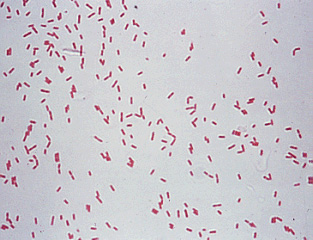
"Pseudomonas aeruginosa is the epitome of an opportunistic pathogen of humans. The bacterium almost never infects uncompromised tissues, yet there is hardly any tissue that it cannot infect if the tissue defenses are compromised in some manner.
Pseudomonas aeruginosa is a Gram-negative, aerobic rod belonging to the bacterial family Pseudomonadaceae. The family includes other genera, which, together with certain other organisms, constitute the bacteria informally known as pseudomonads. These bacteria are common inhabitants of soil and water. They occur regularly on the surfaces of plants and occassionally on the surfaces of animals. The pseudomonads are well known to plant microbiologists because they are one of the few groups of bacteria that are true pathogens of plants. In fact, Pseudomonas aeruginosa is occasionally a pathogen of plants. But Pseudomonas aeruginosa and two former Pseudomonas species (now reclassified as Burkholderia) are pathogens of humans. A general treatment of the pseudomonads is presented in The Genus Pseudomonas . This chapter deals specifically with Pseudomonas aeruginosa as a pathogen of humans.
Pseudomonas aeruginosa is an opportunistic pathogen, meaning that it exploits some break in the host defenses to initiate an infection. It causes urinary tract infections, respiratory system infections, dermatitis, soft tissue infections, bacteremia, bone and joint infections, gastrointestinal infections and a variety of systemic infections, particularly in patients with severe burns and in cancer and AIDS patients who are immunosuppressed. Pseudomonas aeruginosa infection is a serious problem in patients hospitalized with cancer, cystic fibrosis, and burns. The case fatality rate in these patients is 50 percent."
Related Course: Introduction to Biotechnology ¶ 11:30 PM

"Pseudomonas aeruginosa is the epitome of an opportunistic pathogen of humans. The bacterium almost never infects uncompromised tissues, yet there is hardly any tissue that it cannot infect if the tissue defenses are compromised in some manner.
Pseudomonas aeruginosa is a Gram-negative, aerobic rod belonging to the bacterial family Pseudomonadaceae. The family includes other genera, which, together with certain other organisms, constitute the bacteria informally known as pseudomonads. These bacteria are common inhabitants of soil and water. They occur regularly on the surfaces of plants and occassionally on the surfaces of animals. The pseudomonads are well known to plant microbiologists because they are one of the few groups of bacteria that are true pathogens of plants. In fact, Pseudomonas aeruginosa is occasionally a pathogen of plants. But Pseudomonas aeruginosa and two former Pseudomonas species (now reclassified as Burkholderia) are pathogens of humans. A general treatment of the pseudomonads is presented in The Genus Pseudomonas . This chapter deals specifically with Pseudomonas aeruginosa as a pathogen of humans.
Pseudomonas aeruginosa is an opportunistic pathogen, meaning that it exploits some break in the host defenses to initiate an infection. It causes urinary tract infections, respiratory system infections, dermatitis, soft tissue infections, bacteremia, bone and joint infections, gastrointestinal infections and a variety of systemic infections, particularly in patients with severe burns and in cancer and AIDS patients who are immunosuppressed. Pseudomonas aeruginosa infection is a serious problem in patients hospitalized with cancer, cystic fibrosis, and burns. The case fatality rate in these patients is 50 percent."
Related Course: Introduction to Biotechnology ¶ 11:30 PM

